Showing posts sorted by relevance for query lit phil library. Sort by date Show all posts

Wednesday, 12 May 2010

Bookbinding Update

This is to continue on the topic I sort of started here, where I was making the decision about attending bookbinding classes. They aren't really classes, per se, more gatherings of people with a range of skills. Money goes to the man who organises it all depending upon whether one is working on their own project or mending a book belonging to the Lit Phil library. When I finished my beginner's project, making two small


notebooks, I'd intended to move onto the Lit Phil books and save myself £8 per visit, but Bill


produced a stack of elderly, ragged books from our shelves and so I thought I'd try mending my Grandma's cookbook.


Derek asked if I minded being thrown in the deep end, and since I've found it all reasonably do-able thus far, I said 'Not at all'. So he set me to work with a needle and a discarded end paper selected to match my paper as closely as possible with respect to colour, texture and grain. My task


was to carefully trace the ragged edge, scoring the paper that was to form the new edge of the crumbled page. I then pulled this scored edge apart and lined it up with said page. Then I tore a piece of lens paper to create a ragged edge and laid this over the join (in some places, a gap, due to my limited skill) between the old and new edges. I brushed paste over the paper and left it to dry. I'll find out what happens next tomorrow! As you can see, Derek is also frugally minded, using old transformers as weights, and we save lots of scraps for later use.


My beginner's books aren't perfect, but I'm pleased with them.


You can see the difference between a machine stamped label and one stamped using individual letters, like little branding irons.


Mind, the total cost of attending the class so far means that these booklets cost £81 each. I wouldn't necessarily have paid anyone to save Grandma's cookbook, but I'll factor that into the sum when it's done. I'm just hoping I get some Christmas presents out of this class!

How do you decide whether a hobby is worth the expense?

Sunday, 28 February 2010

Mrs Beeton & the Bookbinders

I mentioned having gone into the LitPhil library


to copy some recipes from a cookbook by Mrs. Beeton. It was in fact her squillion-page book on household management, the kind of thing I love to read, mainly because I know I don’t have to do all that stuff.

Anyhow, this was shortly before Christmas and I had a list of errands to run in Newcastle before my car parking ticket ran out. However, after copying the recipe, I took the time to take a couple of photographs of the book cover (just for you...). This got the attention of the two men also sitting at the big table. One of them commented on the state of the book’s spine, it being rather old and worn (it is pictured at the link above). I said I rather liked the shabby look as it did honour to the book’s age. He said they left it that way on purpose when they repaired the bindings, was I interested in seeing how they did the bookbinding? He was treasurer of something or other and could take me next door to where they were working.

I said I needed to check my Christmas shopping list to see where I was with it and he answered ‘Quite right.’ and carried on his conversation with the other man. I think he took that for a ‘No, thank you’. I found, however, I could scratch off all but one or two things by then so, after disappearing to the ladies room where I decided one should always jump on serendipitous opportunities, I came back and found him gone. I spotted him reading over letter before affixing his signature and handing it to one of the library staff. He seemed surprised to see me standing there when he finished but then realized I was in fact interested in his kind offer.

I followed him through a couple of doors which connected the LitPhil to Bolbec Hall next door on the corner. A large grand room


was crammed full of tables and chairs and 20 or so people were all busy stitching, gluing or pressing various books. The man started to introduce me to a few people, then realized we’d not met ourselves. His name was Chris. I’ve no idea the names of the 4 or 5 people I shook hands with, but the fiddly work they were all doing looked fascinating.


Chris showed me how to tell the direction of grain in paper. He said most cheaply published books had the grain going the wrong way (horizontally across the page). He showed me a book he’d been working on for 7 years. It must have been in wretched condition to


take that long, mind I took away the impression that they only do this volunteer work on Thursdays. Also, he struck me as being too hyper and too extroverted to sit and sew for long, though he was obviously very enthusiastic about his subject.


I asked how long it took to learn bookbinding skills. He said the basics could be learned in about 3-6 weeks. I told him I did quite a bit of hand sewing and thought I might be suited to this sort of thing. He mentioned classes and gave me a name and phone number to contact. He gave permission to take photos, so long as I got permission of the people who would be in them, he knew there were a couple who disliked photographs.

Leap forward to here to eavesdrop on the conversation Bill and I had after I contacted Derek, the man who leads the bookbinding group and found that one pays an annual membership of £55, plus £8 per class, plus either £3.80 Metro fare or £2.00 parking and about £2.60 in petrol…. I‘ve been to my second bookbinding class now.

I can now tell you (if allowed to consult my scribbled notes) three different ways to tell which way the grain runs in a large sheet of paper, also how many grams per square metre different types of paper weigh. I am well on the way to finishing 2 A-5* sized booklets, each having 72 pages. I folded the large easel sized paper into quarters using a tool made from bone (I forgot to ask whose). Then I cut the end papers to size and glued a strip of linen onto the folded end papers.

The next week we set up a sewing rack and after making holes in each section of paper and the end papers, I sewed the pages to linen tapes, using linen thread, then glued the next to last section to the last section at the fold (apparently this is a weak point in most books and where they fall apart) and the last section to the end paper so the linen strip wouldn’t show. There are special tricks for joining more thread to a dwindling length, for splitting the thread with the needle to keep it from coming out of the needle and for making a neat job of gluing. Apparently I’m a good sew-er, but (no disrespect) Margaret is the neatest. I plan to watch Margaret sometime.

I know that next week I need to take an old (and therefore thin edged) kitchen knife with a rounded end (so it doesn’t poke through where you don’t want it to), we have a million from the flea market and from Ellen, in order to cut the folded pages apart. It was that or pay £1 each to have them sliced on a machine (I ask you!) I’ve no idea what comes after that, but I’m really looking forward to it.

The majority of people there are mostly in their 50s and 60s, I would guess, and extremely friendly and welcoming. Most have been doing this for years – anywhere from 3 to 30 and they were all pleased to tell me about their current projects. They bind their own books, they bind some for private customers, but mostly they repair books for the LitPhil Library. If I understood correctly, those doing work for the library don’t have to pay the £8.

Derek is the Master Craftsman that everyone gets advice from, even the ones with the most experience. He’s a lovely, cheerful man with funny stories to tell about his apprenticeship and work in the commercial world. The library staff bring in coffee and tea at 3pm and Derek's wife always sends several dozen cupcakes and he says he's not allowed to bring any home. I haven’t taken my camera with me to classes, wanting to settle in a bit first, but I have some photos I took that day back in December and you can be assured you will see my finished booklets.

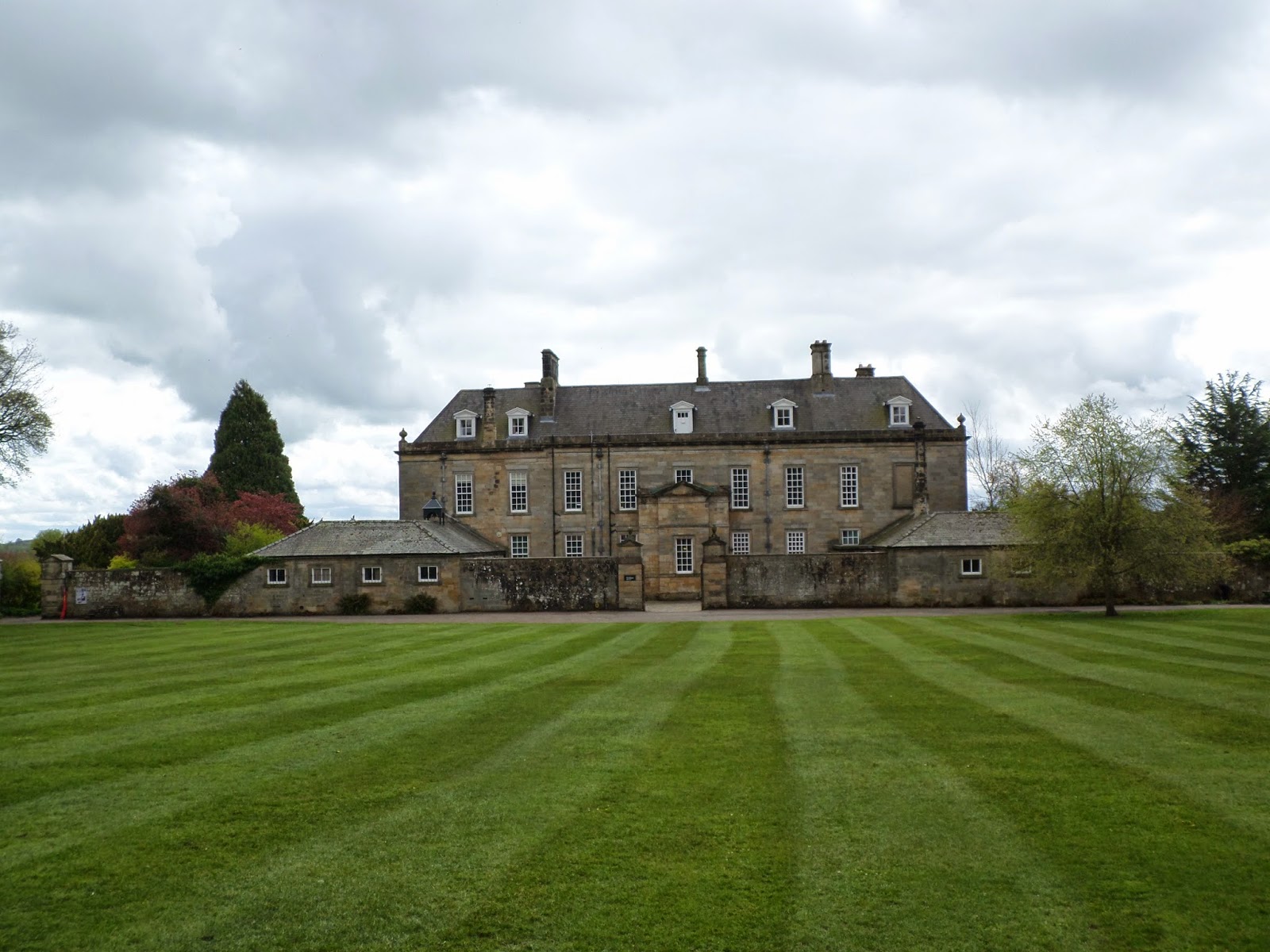
By the way, I belive Bolbec Hall (the corner building below) is currently for sale, for something like a million pounds. Because it was actually built to be part of the Lit Phil Library (pictured at the top).


and it seems to only consist of a couple of rooms on each of 5 or 6 floors around a winding staircase, I can’t imagine what use someone would put it to. However it is a gorgeous thing, as you can see.

Also, on the floor above the bookbinders is the Northumberland and Durham Family History Society, of which Bill is a member. I believe because he is a member I can join for just £2. They are seeking volunteers for various transcription and other jobs. Must go in early one day before class and check them out. It won’t be anything to do with my family tree, but it might be interesting all the same…


*Re: A5. I've linked you to an explanation, but I'm not sure it helps. Apparently everywhere in Europe uses this paper system instead of 'legal' and 'letter' like in the States. It was part of the new language I had to learn when I came across. The simplest way of explaining it is to tell you that the big pads of paper used on easels for presentations with magic markers, back in in the dark ages, would be sized A1. Fold it in half and you have A2. Fold that in half and you have A3. Do it again and you have A4, which is your standard printer paper, close to letter sized but slightly longer and narrower. Fold that in half and you have a nice little booklet sized A5 that you can tuck into your purse, which is what I'm making.

Wednesday, 16 September 2009

The Literary Ladies' Room

I told you about the Lit Phil Library months ago and promised to tell more later. Sorry to have left it so long.

I don’t have pictures of all my favourite bits, so will have describe them: Towards the back of the main room there is a large oval table where people are encouraged to bring their lunch; one can eavesdrop on quite learned and heated debates amongst the retired professor-ly looking types.

A square of bookcases encloses a small table and chairs, a perfect little corner for children, though I rarely see any there; I have to admit that the children’s books are fairly intriguing as well.

There is a window through to a kitchen area at which one can purchase a cup of tea (black or herbal) or coffee for 70 or 80 p. Along with the drink comes a choice of biscuits (AKA cookies). I usually chose the ginger snaps, as they were the lowest in fat.


After 2pm, the kitchen is shut. Then there are large thermos flasks of coffee, water, cold and hot milk; also a bowl of instant coffee, sugar, sweetener tablets and a selection of tea bags, not to mention the Tupperware boxes of cookies (with a note asking you to re-seal the box). It’s all on an honour system where one pays at the front desk for their drink. Along with the marvelous architecture, the wonderful books and the amazing furniture, I've always fond that honour system a lovely feature of the library.


There is a grouping of enveloping leather chairs around a coffee table where I often sat drinking my coffee and read Country Living, Vogue or Good Housekeeping. This was quite near the section where cooking, gardening, homemaking, crafts and needlework books could be found as well.


However, my very favourite place to read magazines was in the Ladies’ Room. Not the actual toilets, of course, but an ante-room to the toilet with comfy couches and chairs, tables and lamps, just perfect for a quiet read.

Mind, the toilets themselves are fairly interesting. One goes through a door into a small entry to doors on either side, which each open into an area with hand washing facilities (marble sinks, a cloth towel, an electric hand dryer and marvelous door furniture), and then the actual toilet in another room beyond that. It doesn’t do to leave going to the loo too late, given the obstacles to be overcome.


There were a couple of occasions when working on technical projects I found it easier to left my shared office a couple of blocks away, take my laptop to the library and sit at the table in the ladies room. Beyond the quiet, I found the whole atmosphere to be soothing.


(Yes, I know it's daft, but I get quite enthusiastic about door furniture.)

So now you know all the secret stuff about the LitPhil – well everything a non-member gets to know.

Saturday, 21 March 2009

And You Thought Nigella was Sexy...

It looks as though I'll need to go back to the library if I'm to tell you the name of the book I want to tell you about; that's the book that made me buy another book after finding the second book in another library. Confusing, isn't it?

It was a couple of years ago when I got bored with fiction and went on a women's biography reading kick. Biographies because I wanted to see what other people had done with their lives that was apparently worth writing about; women because I may have been looking for a role model. I read a biography and an autobiography of Eleanor Roosevelt and learned that each could be illuminating. I read an authorised and an unauthorised version about someone else and found the latter are far more interesting. I read about Goldie Hawn and Hillary Clinton and many others I can't name though I knew the names when I chose the books.

Then there were many I read about women I'd never heard of before. I read about some woman found living in a house in the Yorkshire Dales without utilities, still tending cattle through the winters into her 80's; her hardships and independence were impressive. I read about two women who bought an island off the coast and made a living growing daffodils and about another lone woman who worked a croft on a bare western isle of Scotland. I didn't need to have heard of the person, the book just had to catch my interest and so I found the biography of Elizabeth David. These articles tell you a bit about her. Suffice it to say she lived an interesting life.

So when I found her cookbooks at the Lit Phil library near my office, I found a great way to spend my lunch hours. She doesn't just give you a recipe, she gives you her opinions and outlook as well.
I haven't actually used her recipes as yet, but I do feel much more confident about experimenting with food and throwing things together, which is probably the main reason I really enjoy cooking now.

Also, set in the time when she first published, just after WWII, I can easily see why they were so popular. As the links indicate, rationing continued in post-war Britain far longer than elsewhere. Traditional British food is nothing I would aspire to learn to cook. I'm not a big fan of kippers or pork pie, Yorkshire or black pudding. One can only consume so much fish and chips or so many pasties before ballooning to enormous size. Deprivation and hardship as a contribution to winning the war would be one thing; rationing and scarcity after it was supposedly won would have been another.

When they were published, reading her books was like a Mediterranean holiday, a vicarious visit to another lifestyle. During the last years of work I needed more than the usual number of vacations and her books were just the ticket.


You'd enjoy a Mediterranean holiday, wouldn't you?

Sunday, 7 August 2016

Art, Religion, Food - Part II

This continues the story of a day I spent with Vivien in Newcastle.

Leaving the Discovery Museum, I wanted to check out the businesses occupying the arches of the main railway bridge. I'd read about them and was curious about what was there. I think Vivien thought I was nuts, but it seems to be all the rage, having your small business in an arch.


Following our noses after that took us to Newcastle Castle, actually just the castle keep remains. Funny I didn't think to take photos of it...I can tell I've lived here over 20 years now. Right behind the castle is Milburn House, where Vivien and I once worked.


Milburn House was once a shipping office in the early 1900s. There are still doors that open into black, cavernous safes and sea waves decorate the tiles which cover the walls. The floors are given letters rather than numbers, apparently like ships' deck were identified back then. There were also several wings on each floor. We had plenty of visitors get lost, it being in the maze of streets in the city centre, followed by the confusion of the ground floor being A and the top floor E and then needing to know whether to go N or S...


It's an amazing building in a great location (if you don't mind walking up and down the hill that is Dean Street), but being a listed building limited how offices could be arranged and I found it a very inconvenient. I spent a lot of time with my laptop in the Lit Phil Library to have enough quiet to work, since I shared my office with two other people.I probably have some photos of Milburn House somewhere, but it's easier just to show you these.


Right behind Milburn House, is the Cathedral of St. Nicholas (come to think of it, virtually everything in the city centre is practically on top of each other). I remember it was my habit to work into the evening but one night a week I would be driven from my office by the incessant bell ringing at St. Nicks. Just as well, I gave them far too much of my life as it was.


Vivien was surprised to find we could just walk into the cathedral and look around. We timed it badly or we could have had a cup of tea in the cafe, so we'll have to return another day. I've put some photos here, but again there are much better elsewhere. Vivien mentioned that St. Nick's is why Newcastle is a city. I can't explain it fully but I have known for some time that being granted status as a 'city' here in Britain is tied to the notion of having a 'cathedral'. It has to do with church and state still being joined. You can read more about it here.


I've spent any number of lunch hours at St. Nick's but I'd not realized until now how incredibly old it is. Originally built as a parish church in 1091, it burned in 1216. The present building was completed in 1350. John Knox was minister there for a few years in the mid 1500's. The spire is beautiful at any time, but seeing it lit up at night always grabs my heart. 

By now I had my heart set on another cup of coffee before we parted and we fell into this interesting looking place where I thoroughly enjoyed the decor. I think we split something sweet between us and Vivien took something home to Steve, as she often does. 


I was hoping Patisserie Valerie's website had some better photos, but instead I found videos of lovely cakes being made. I'm afraid the thought of all that sugar makes my tummy ache, but I know some folks who would enjoy watching!


The title of these two posts is even more fatuous than I'd originally realized. Applying Oscar Wilde's definition of art, fashion probably doesn't qualify as clothing is useful. Neither Vivien nor I are religious, we just appreciated the architecture. And I definitely don't qualify cake as food!

But we had a great day out all the same. We always do.

Thursday, 22 April 2010

Stuck in a Rut?

Somewhere on one of the blogs I read they wrote about falling into the habit of cooking the same old things time after time. I can't find it now...

Then I was at the Lit Phil Library looking through Good Housekeeping and found this article about 'Stuck in a Rut Britain?'

Apparently women here tend to cook the same meals over and over, sometimes even on the same day of the week, which is rather Leave It To Beaver, don't you think? I was struck by what they cook:
  1. spaghetti bolognaise (that's meat sauce to Americans)
  2. roast dinner (I think this means beef or chicken with roasted vegetables, which are very nice)
  3. cottage or shepherd's pie (never made one in my life)
  4. pasta (I would have said number 1 was pasta, but what do I know?)
  5. meat and two veg (this is the UK version of 'meat and potatoes')
  6. pizza (I'm betting this is store bought or ordered in, not homemade)
  7. stew or casserole (this is potentially a fairly large variety...)
  8. sausage and mash / chips (not a usual combo in my growing up years)
  9. curry (ie, something with an Indian sauce poured over it, probably out of a tin or a jar)
Our set meals seem to be
  1. beans in the crockpot
  2. rice dish
  3. pasta and tuna in white sauce with peas
  4. veggie stir-fry
  5. veggie omelette
  6. salmon puff
  7. kedgeree
  8. chicken or turkey casserole
  9. snack night: crackers and smoked salmon, hummus, boursin, eat til we're stuffed...
what are your 'go to' meals?

Wednesday, 1 July 2009

Lit Phil Library - Part I

I mentioned this wonderful place in Newcastle earlier. Here are some pictures I took when I


was last there. These do better justice to the place. Even this isn’t everything there is to love,


but I wouldn’t want you to overdose on the place all at once.

Wednesday, 14 May 2014

Wallington Hall

Since Bill bought us National Trust membership when we visited Seaton Delaval Hall last month, Vivien (a long time member) and I have a whole other set of places to visit. Granted, there aren't many National Trust properties up here in our area, a reason Bill has previously resisted joining. However, Vivien pointed out that one can return again and again, useful since there is so much to see it's always a good day out. She is very fond of Wallington Hall and now I can see why.


We stuck to the gardens on this trip - and didn't even manage all of those; we still have loads to explore! Vivien was patient enough to let me take over 200 photographs. I shall resist showing them all to you and try to get better at the art of a short post (don't hold your breath). This isn't likely to be one.  


There are two local families associated with this estate, the Blackett's and the Trevelyan's.  I've not encountered the Blackett's much as yet, except that their name creeps up on road signs and the like.  I've a real fondness for one particular Trevelyan, as he is the author of my favourite social history book, about which I've written on several occasions. George Macaulay Trevelyan's name is also found in hallowed places like the Lit Phil Library.


The National Trust leaflet says this:
Gifted to you by Sir Charles Philips Trevelyan, socialist MP and ‘illogical Englishman’, our 13,000 acre estate has something for everyone.


Naturally I had to read about Sir Charles Philips Trevelyan and find out how he was related to G. M. Trevelyan.  (Sir Charles was G.M.'s older brother).  I found interesting snippets to share, but I'm going to put those in drafts to accompany other photos. 

Another ha-ha!


Saturday, 19 December 2009

Christmas Foods in Britain

There are several foods that one will invariably encounter this time of year over here, they are completely unavoidable, thrust in ones face at every turn should one step outside the house.

Mincemeat pies. I always heard of these when in the US. I thought they would be something to do with hamburger or at least shredded beef, but they taste mainly of sugar and fruit. Turns out, however, that even modern recipes include beef suet. Sounds disgusting, but these are quite delicious, in small amounts. Bill caught me looking at this 19th century recipe and reminded me that we in fact have an 18th century recipe, that of Elizabeth Smith, in her book dated 1732:

Par boyle sheeps hearts, 2 pd (ie pound?) of meat and a pd of suet. Mince them fine then to every pd put 2 pd of currans [currants], half an ounce of cinnamont mace cloves and nutmeg. Half a gill [ apparently pronounced 'jill'] of sack [a dry fortified wine such as Port or Sherry], a little brandy, rosewater, orange flower water, half a pd of sugar, lemon and orange pill [peel], 3 pippins [apparently these are small apples]. Mix them well.

So, now you know what to do with sheep's hearts...

Shortbread. Everyone knows what this stuff is, largely flour, sugar and butter. Rich and delicious, one of my favourites from childhood when sweets were not commonly allowed. Their history is an interesting read.

Christmas Pudding. When in Newcastle the other day I dived into the Lit and Phil Library to consult Mrs. Beeton's for a recipe. Little did I know I could have got it online.


Mrs. Beeton is practically a household word over here, sort of like Betty Crocker or perhaps even Martha Stewart in the US. Actually, looking through the online text, however, I do not find this recipe for Christmas Pudding (Rich) - Pudding de Noel, so it's a good thing I wrote it out after all:

Ingredients.- 1/2 a lb. of beef suet, 1 ounce of flour, 1/2 a lb. of raisins, 1/4 of a lb. of mixed peel, 1/2 a grated nutmeg, 1/2 an ounce of mixed spice, 1/2 an ounce of ground cinnamon, 1 gill of milk, 1 wineglassful of rum or brandy (optional), 1/2 a lb. of breadcrumbs, 1/2 a lb. of sultanas, 1/4 of a lb. of currants, 1 lemon, 2 ounces of dessicated coconut or shredded almonds, a pinch of salt, 4 eggs.

Method.- Shred the suet or use shredded. Clean the fruit, stone the raisins, finely shred the mixed peel. Peel and chop the lemon rind. Pull all the dry ingredients in a basin and mix well. Add the milk, stir in the eggs 1 at a time, add the rum or brandy and the strained juice of the lemon. Work the whole thoroughly for some minutes, so that the ingredients are well blended. Put the mixture in a well-buttered pudding basin or pudding cloth; if the latter is used it should be buttered or floured.

Time.- Boil for about 4 hours or steam for at least 5 hours.

Sufficient.- for 8 or 9 persons.


Monday, 21 December 2009

Shortest Day - Longest Post

Today is the shortest day of the year. According to WikiAnswers, historically, Christmas Day was set by the Roman Emperor Constantine. When he converted from Paganism to Christianity, he identified Jesus with the Pagan Sun God. The Winter Solstice is when the days start to get longer, and may thus be regarded as the birth of the Sun. Who knew?

We had sunrise at 8:29 am and the sun will set at 3:38 pm. It is icy here with a sparse snow on top. I'll be headed for the beach to run on sand instead of slick pavements.

Holiday Tidbits (over here they say ‘titbits’). Lots of good things have been happening here, little things but, to me, great fun.


===> The day after Thanksgiving, one of Bill’s new found cousins, Ann, and her husband Mick dropped by for a chat. We've just missed them on their previous trips up here from Coventry, being in foreign parts. Her father was the youngest brother of Bill’s paternal grandfather, a brother he didn’t know existed until she contacted him through Ancestry.com. Ann very kindly brought half a dozen old family photos to give to Bill. I’ve selected her parents’ wedding picture, as it dates from 1927 and I love the outfits. Ann and Mick were lovely and we had a great visit. They talked about their travels in Europe by mobile caravan (that’s an RV over here), something we’ve considered on occasion. I shall look forward to being in touch with them and seeing them again sometime, perhaps when Jane is around.


===> We went to the flea market at the Tynemouth Metro the next weekend to start our Christmas shopping. Bill’s mouth watered at all the heart-clogging delicacies available in the French Farmers’ Market. Lots of young women were also enchanted with the men’s accents. I found it amusing they walked around between their stalls carrying glasses of red wine. A marketing ploy, perhaps?

Also, Bill knew there were re-conditioned Dyson Hoovers vacuum cleaners to be had for only £30-40 (They call vacuum cleaners Hoovers over here just like I used to say Xerox for photocopy). We bought one of the older upright models for the upstairs to save lugging the other one up and down. I loved our first Dyson but the next one Bill got was the big ball and stick kind and I hate it. Can’t believe Dyson designed such a monstrosity. Have his amazing hand dryers made it to the US yet? Or perhaps he started them there, can’t remember where he lives now…


Anyhow, the other brilliant thing we got at the flea market was a coat rack, something I’ve wanted for absolutely ages. Bill keeps thinking there’s a man standing in the hall and jumps every time he comes out of the kitchen, but he’s learning to live with him it. This, too, saves trips up and down stairs to put guests’ coats away. I must be getting really lazy in my old age.

===> I met up with K for a coffee and some shopping. It was lovely to see her looking so happy and confident. I was on her PhD committee – seems like ages ago now – and she was always a bit unsure of herself back then. She now has a research post at Durham University and she seems a whole new person, very self-assured. I love watching her grow and am so honoured that she wants to keep in touch. Even though it wasn't 'in my job description', the time I spent mentoring her is probably about the most satisfying thing I did in my worklife over here.

We poked around in the Raspberry Bazaar, had coffee in the café at the Land of Green Ginger and then popped into the funny little boutique, Gaf. I had a great afternoon just looking, as usual, though I did buy a couple of Christmas decorations for £1.50 each at RB.


===> I got a thank you note for the Thanksgiving evening on the back of the picture half of a recycled card from one of my wealthiest friends. I absolutely loved it! She understands the fun of the game!


===> Another friend, a former colleague from the University, who came to Thanksgiving invited us to attend a choral presentation from the Gilbert & Sullivan Society (I'd link you there, but the website doesn't work). The director of TGSS is also a former colleague (I don't think he needs much sleep). It was in a nice old church, easy to get to, and so we went.

It was titled Christmas Feast and they sang all songs about food, not necessarily from G&S. They served shortbread and minced pies at the intermission. I quite enjoyed it, in spite of it being a long time to sit on a wooden pew and too chilly to remove my coat. I mostly closed my eyes and let the lovely sounds wash over me.

The audience was invited to sing a couple of Christmas carols with them and I was reminded that Bill has a tolerable singing voice, which runs in his family. In between songs, the director read ‘olde-worlde’ snippets from Mrs. Beeton, which made me think of the previous post.


===> Of course I chose the day with the worst weather – wind, sleet and snow --

to go into Newcastle for Christmas shopping.

Funny thing was, as everyone else was screwing up their faces and clutching their coats I felt quite happy.


I realised then how very much I miss snow at Christmas time. It was lovely to see it fall, even if it didn't stick.

As I said earlier, I dropped into the Lit and Phil library that day. Whilst sitting at the table a man struck up a conversation and made me an offer I couldn’t refuse. Before I knew it I was getting up and going next door with him. I shall tell you all about it next year!


I also took some snaps of Fenwicks department store windows.

My camera does do videos, which would have been more appropriate to capture the animation, but I didn’t think of it at the time


and I’d have to figure out how to put the video on the blog.


I’m sure it’s not that hard, but that challenge will also have to wait until next year.


Fenwick's Christmas window displays are a part of the season here

as much as perhaps Macy’s parades on a smaller scale. I

thought of my Uncle Pat when I took these photos, thinking

he would appreciate knowing that in this secular country

there are still some who realise that ‘Christmas starts with Christ’.


Wednesday, 14 April 2021

Reading

When I returned home from the library last Friday, I unpacked my backpack to see which books had been loaned to me.  One of them, a biography, I had no memory of requesting. I knew neither the name of the author (Hermoine Lee) or the subject of the book, Penelope Fitzgerald. I decided to read it anyhow, given that Fitzgerald was known for having published her first book at the age of 60 and having won the Booker Prize aged 73. Another three of her novels were shortlisted; not a bad record for the author of nine novels. I'm always happy to be inspired by a late bloomer, given the number of things I still aspire to accomplish in spite of soon turning 65. 


Though I'm now barely into the second chapter - this book has tiny print and is not an easy read, I spent much of the first chapter referring back to the family tree at the front, which had annotations that didn't become clear until I'd read well through that chapter - I believe I'm going to enjoy this challenging book. Fitzgerald lived between 1916 and 2000 and grew up in an illustrious family full of Church of England bishops, Catholic priests and writers - her father was editor of Punch magazine. Fitzgerald described her childhood home well enough to make one bask in the cosiness of interwar England. 


"She recreated the vanished 1920's Hampstead of her childhood with pleasure and precision. 

The village - and Hampstead still felt itself very much a village - was a place of high thinking, plain living and small economies. The steep charming old streets were full of ham and beef shops, old bookstalls, and an amazing number of cleaners and repairers, all helpful to shabby refugees and literary men. There was even a jeweller's where one bead could be bought at a time, for all the Hampstead ladies wore long necklaces. The livery stables had only just turned into a garage...poets walked the streets, Stanley Spencer pushed his pramful of painting materials aimiably across the Health...

This was a Georgian childhood. The streets in her memory were not only full of poets in their 'wide brimmed black hats', but also of lamplighters coming round to light the gas lamps, muffin men in winter, and lavender sellers in summer, knife grinders and chair menders, pony-carts brining dairy milk from the farm at Highgate. Gazes the drapers had everything you needed in 'the button, woollen, stockings and knicker line'; Knowles Brown the clockmaker had a silver clock in the window in the shape of a spaniel whose tongue moved up and down with every tick; small shops sold 'pennyworths of licorice'. 

Hampstead was literary, poetic, artistic, rural, part-bohemian, part-genteel. It was not a bit like Bloomsbury...Hampstead was 'undemanding' and 'homely'."

Fitzgerald's father and his brothers all went to Oxford. Two of her grandfathers were vicars and then bishops. The cosiness of their time is in part due to their station in life as much as in the time in which they lived. I'm always rather envious of the descriptions of the gardens / orchards / vicarages / country houses, all down south where they actually experience summer most years. 

My local library has only a couple of her books, but the Lit and Phil has more, including The Bookshop. I see that Hermione Lee has also written biographies of Willa Cather and Edith Wharton, also two intriguing books, The Lives of Houses and The London Scene. I don't think I'll ever run out of what to read!