Friday, 7 September 2012

Part IV - The Leisure Class and Ownership

This is part of a series discussing The Theory of the Leisure Class, written by an American economist named Thorstein Veblen and published in 1899.  He calls his second chapter Pecuniary Emulation.   


Veblen says the emergence of a leisure class coincides with the beginning of ownership.  Before this cultural stage, individuals use or consume goods without specifically owning them.  As discussed in an earlier post, the distinctions between a leisure and a working class begin to appear in the lower stages of barbarism, the distinction being between the work of men and that of women. 

Likewise, Veblen claims the earliest form of ownership was ownership of the women by the able bodied men of the community, or more specifically a woman owned by a man.  This custom began with the seizure of female captives, initially as trophies, but this gave rise to a form of ownership-marriage, resulting in a household with a male head. 

Following on from this was an extension of slavery to other captives and inferiors besides women, and an extension of ownership-marriage to women other than those seized from the enemy.  The outcome of emulation under a predatory lifestyle has been therefore, a form of marriage based on coercion and the custom of ownership.
 
"Both arise from the desire of the successful men to put their prowess in evidence by exhibiting some durable result of their exploits.”
 
From owning women, then comes the idea to include owning other products of their exploits.
 
In the next post, we’ll talk about envy and self-esteem according to Veblen.

Wednesday, 5 September 2012

Views from the Road

No idea how to make this the 'right' size; I can live with this if you can...

The early days of the holiday were taken up with driving.  Our ultimate aim was to visit Simon at his new flat in the south of France.  This being our first journey to France in the motorhome, we had loads to learn. 

Lesson number one was not to be too ambitious about distances in an older motorhome. 


Lesson two was that the smaller roads are quite scenic, but there are roundabouts every few miles and the few places one can stop are not well marked.  What is saved in toll fares is probably lost in fuel efficiency.   Mind, you all probably watched the Tour de France and won't be at all surprised that France is scenic.


Lesson three:  the large highways are pretty boring.  You could be driving anywhere, they are so modernly non-descript.  However, there are well marked  rest areas (aires de repos) which are most welcome.


We only stayed one night at Châlons-en-Champagne and another at Port de Lyon before heading to our first long stay near the small village (about 600 pop.) of Bourdeaux in the Rhône-Alpes region. 

If Châlons was convenient for a bread shop, the site at Lyon gave access to a Hypermarche Auchan - looked like Wal-Mart to me, only without Wal-Mart People. 

Lesson four:  bread from a supermarket is not nearly as nice as from a boulangerie.
 

Monday, 3 September 2012

Another Wander Round Whitley Bay

I had hardly seen Vivien in months; she was on a cruise in the weeks before we left for France, so I was looking forward to catching up.  There were several places I wanted to check out in Whitley Bay, so that's where we headed.


Our friend Lucy has found a job and so sadly she wasn't able to join us.  Her family have finally found a four bedroomed house that suits them - well, it's currently being re-wired, re-modelled and re-painted with a second bathroom being added - or will soon suit them.  They have to be in by September when their rental lease runs out.  Vivien and I had a vague impression of what street the new house was on, so we added this venture to our route. 


First of all I wanted to visit Milk It.  I'm not sure about that name, but basically it is sort of an Etsy shop, only you rent a 'shelf worth' of space for £10 a month, after an annual £50 'admin fee'.  I wanted to see what sort of things one might find there.  I didn't take photos, assuming they wouldn't be appreciated.  I shall go back sometime and ask - it is foolish to assume.   (There are loads of lovely photos on their website, though).  


Vivien and I were wondering if it would be fun for the three of us (with Lucy) to rent a 'shelf' (they disperse items where ever they can best be displayed).  I don't think it would be feasible to make any real money, but we might try this out sometime.  I'll certainly let you know if we do.    There were loads of really cute and clever items in the shop, but none like the items we three like to make! 


Another place I had read about ages ago was a 'vintage coffee shop' called Anywhen's.  I absolutely loved the place.  We sat and chattered over lunch and then took loads of photos (all those on this post).


Another place we discovered in Whitley Bay was Rosewill Cottage, where they sell beads and bits for making jewellery.  Now, since I have all of my Aunt Rita's jewellery, anytime I'm the least tempted to buy anything I remember that Bill would have me sectioned if I did.  I would like to re-make some of her necklaces and bracelets, however, as I think I would wear them more often.  I've been looking for classes for some time and now I know just where to find them!


And, finally, we couldn't resist a vintage shop called Dregs of Society.  The crockery displays outside were delicious and the clothing and furniture inside were like a time machine back to the 60s and 70s.  I don't want to re-live those years, but it is eerie finding things you grew up with in a 'vintage' shop...or worse, a museum.  Just you wait, one day...  Actually, remembering a cream brocade cape I saw in the attic, from the 40s or 50s (my first mother-in-law), I should take it to her to sell on consignment.

With all this shopping, you might think I spent a small fortune, but that's not the case.  I paid about £3 for my Metro ticket, about the same for my lunch and a couple of quid for tea and half a toasted tea cake.   For the uninitiated, a British tea cake is just like an American hamburger bun only with raisins in it instead of caraway seeds on top.  I think Vivien bought a get well card at Milk It.  In all I had a great day our for less than a tenner!


Not having a more definite plan, we wandered through Monkseaton (past the bowling green) looking in vain for a coffee shop.  We ended up going around in a great circle back to Whitley Bay, where we did find a place for a tea break. 


I'm afraid we walked much further than we'd intended.  By the time she walked home from her metro, Vivien had chalked up 8 1/2 miles... it's a miracle that she's still speaking to me!


Friday, 31 August 2012

Part III - Barbarian Culture

This post is part of a series about Thorstein Veblen's Theory of the Leisure Class: An Economic Study of Institutions.


In this, Veblen writes that it is in ‘the higher stages of the barbarian culture’ that one finds the best developed tradition of the leisure class, characterised by rigorously observed distinctions between and within the various classes. He gives examples, eg feudal Europe or Japan amongst others, though his Wikipedia entry says that some of these cultures were fictitious! Let's ignore that for now, because Veblen's theory is nonetheless interesting and, I think, quite applicable.

Veblen says the most striking economic issue in the barbarian class distinctions is about what constitutes 'proper' employment. For example, the upper classes are barred from ‘industrial occupations and are reserved for those few occupations 'to which a degree of honor attaches':  government, warfare, religious observances and sports, but primarily the first three.

“Manual labor, industry, whatever has to do directly with the everyday work of getting a livelihood, is the exclusive occupation of the inferior class. This inferior class includes slaves and other dependents, and ordinarily also all the women. If there are several grades of aristocracy, the women of high rank are commonly exempt from industrial employment, or at least from the more vulgar kinds of manual labor.”


In talking about Nordic and North American hunting tribes, in which the leisure class wasn't yet entirely applicable, the distinction is made between occupations of men and those of women and 'this distinction is of an invidious character'.  In these tribes, the women are by prescriptive custom held to the employments out of which the industrial occupations later develop.  Men are exempt from these 'vulgar employments' and are reserved for war, hunting, sports and devout observances. Although the men's work may contribute as much to the food supply and thus be considered 'productive', the hunter does not see himself at all connected with women's uneventful drudgery.  Rather his work is admirable and full of adventurous exploit.  Thus, the first class distinction was to give women a lower status.

Veblen says for a leisure class to emerge there must be three things in place:  

a) the community must be of a predatory habit of life, eg war and/or the hunting of large game; the men in the undeveloped leisure class must be habituated to inflicting injury by force and strategy;

b) subsistence for the whole of the society must be sufficiently obtainable that a considerable portion of the community can be exempt from steady labor; and

c) there is a growing discrimination between what is considered worthy or unworthy employments.

Unworthy employment includes all those necessary everyday things involving no element of exploit.  When reading this the phrases ‘women’s work’ and 'blue collar vs white collar' jobs came to mind.  Value labels are attached not just to the work, but even to the tools of labour.  It is reserved for a higher class to even handle the accoutrements of war or worship, but the ‘brute materials’ he calls ‘inert’ are left for the women to make useful. 

“Such being the barbarian man's work, in its best development and widest divergence from women's work, any effort that does not involve an assertion of prowess comes be unworthy of the man. As the tradition gains consistency, the common sense of the community makes it into a canon of conduct; so that no employment and no acquisition is morally possible to the self-respecting man at this cultural stage, except as proceeds on the basis of prowess - force or fraud. When the predatory habit of life has been settled...by long habituation, it becomes the able-bodied man's accredited office in the social economy to kill, to destroy such competitors in the struggle for existence as attempt to resist or elude him...”


Again, Veblen emphasises that the distinction between exploit and drudgery is an invidous one. Employments without honourable  status, particularly any that imply subservience or submission are unworthy, debasing, ignoble. The concepts of dignity and worth are not just applied to employments, but also to people and to their conduct (Where would we be without books on etiquette? Was your Grandmother as keen as mine to be perceived as 'respectable'?) and as a consequence, we have the development of classes and class distinctions.  This has knock-on effects, in that where (emphasis is mine):
"An invidious comparison of persons is habitually made, visible success becomes an end sought for its own utility as a basis of esteem.  Esteem is gainted and dispraise (criticism) is avoided by putting one's efficiency in evidence.  The result is...and emulative demonstration...Tangible evidences of prowess (trophies) find a place in men's habits of thought as an essential feature of the paraphernalia of life.  Booty, trophies of the chase or raid come to be prized as evidence of pre-eminent force.  Aggression becomes the accredited form of action, and booty serves as prima facie evidence of successful aggretion.  As accepted at this cultural stage, the accredited, worthy form of self-assertion is contest; and useful articles or services obtained by seizure or compulsion, serve as a conventional evidence of successful contest.    

Therefore, obtaining goods by methods other than seizure becomes less worthy. Performance of productive work or employment in personal service becomes odious. Labor becomes irksome because it is now undignified and dishonorable.

Veblen goes on something of a rant about 'honorable' : 
“...primarily honorable is the assertion of the strong hand....The predilection shown in heraldic devices for the more rapacious beasts and birds of prey goes to enforce the same view. Under this common-sense barbarian appreciation of worth or honor, the taking of life — the killing of formidable competitors, whether brute or human — is honorable in the highest degree. And this high office of slaughter, as an expression of the slayer’s prepotence, casts a glamour of worth over every act of slaughter and over all the tools and accessories of the act. “


So, these three posts (Savage CultureVeblen's Definitions and Barbarian Culture) cover the concepts discussed in his introduction, ideas that underpin the other chapters which follow.   In the next chapter, he discusses Pecuniary Emulation.

Wednesday, 29 August 2012

Châlons-en-Champagne

I will apologise in advance that most of my French words and place names will not likely have the appropriate accent marks.  I will make an effort, but I'm not promising anything. 

Source:  Google Maps


We spent our first night at Châlons-en-Champagne.  Champagne-Ardenne is a region of France, one of the administrative 'departments'.   Bill drove for hours through The Netherlands, through Belgium and past Reims.    When I see the name Reims, I think of Joan of Arc, having written about her.  Blogging has blessed me more than I can say.


We didn't see much of Châlons, being tired after the drive.  There's not much to get excited about your average motorhome campground. 


That said, we were very excited about ours. 


Because of the warm, the sun, the gentle breeze. 


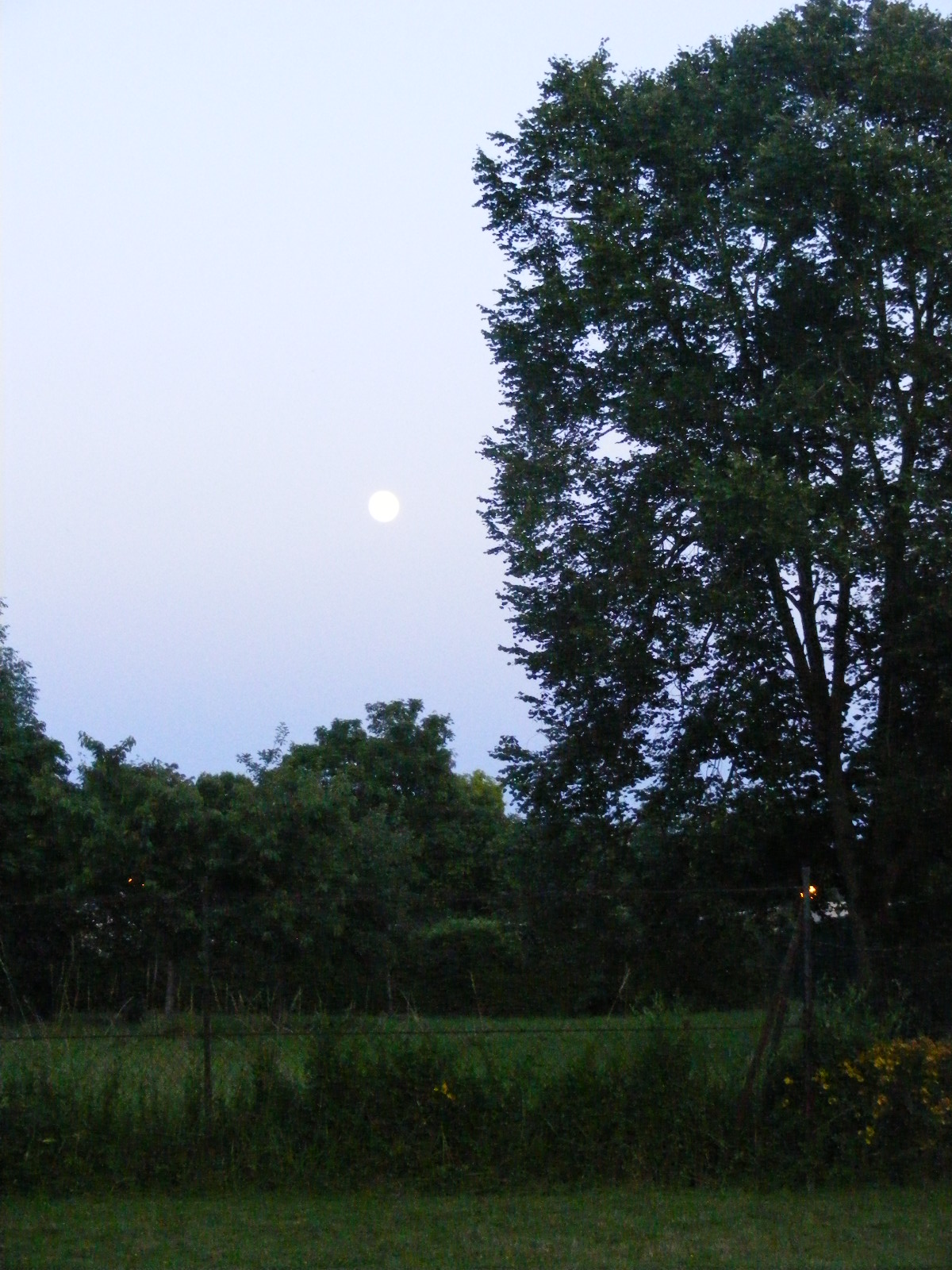
Because of wearing shorts and sandals and walking around a pond under a full moon. 


Because of walking to the boulanger-patissier [bread and pastry shop] just around the corner. 


The houses we passed seemed exotically different and in spite of being weary and worn, I began to feel I was actually on holiday.

-------------------

If it seems to you that I'm all over the place on this blog, you could be forgiven for thinking that (so what else is new?).  There is a plan, however!  If you want to read posts about the book, The Theory of the Leisure Class, visit here on Fridays.  If you are interested in our recent travels in France, pop in on Wednesdays.  On Mondays I hope to blog about the current(ish) events in our real life.  That's the plan, anyhow....

Monday, 27 August 2012

Sunny Day in Tynemouth

The weather this August has been warm for a change!  This includes sunny and bright, dull and humid and horrific rain storms. 


Any excuse to be outdoors!
I'm content so long as I get to wear sandals and leave off the long underwear.


Long Sands Beach


Friday, 24 August 2012

Part II - Veblen's Definitions

This post is part of a (rather ambitious) series on The Theory of the Leisure ClassLast week I outlined Veblen's views on what he called 'savage culture', a concept used to contrast with the barbarian culture he says developed after. 


In describing how the institution of a leisure class came about, he uses words in a way that I initially found difficult.  Even Wikipedia says his writing style is archaic.  If you decide read this book for yourself, and even if you only read my posts,  some of these definitions may help.

animate
The dictionary definition of this adjective refers something living rather than non-living, ie a dog is animate but a car is inanimate. As a verb, animate means to 'impart motion or activity' or 'give life to'. Veblen uses the term in a slightly different way. The term 'animate' in his discussion doesn't mean ‘living’ so much as 'formidable' or 'baffling', not your everyday plants and small animals, but thunderstorms, mighty waterfalls or deadly diseases; the sorts of things almost assigned as having a malevolent will by primitive superstition or pagan lore. I found myself gradually building up a picture of the 'medicine man' or shaman when I re-read those sections. 

emulative
I always thought of this term as rather positive, as in when I try to emulate - ie imitate or live up to - some person or some ideal I admire. It does mean this, but it also means to equal or excel. The context in which Veblen uses this word - nearly as often as 'invidious' - makes me think he more often means excel. Think 'Keeping up with the Joneses' and one-upmanship.

exploit
Current use of this word is more often as a verb (to exploit), however Veblen's use is as a noun: a bold or daring feat. Think of the big stag slain, the battle won, the risky business coup pulled off.  Think of something after which one can swagger into the pub and brag.

honorable
I was thinking of this word a rather positive, respectful way, as in the usual dictionary definition. You may or may not be aware that Honorable (abbrevated Hon.) is also used as a title of respect for certain high government officials; as a courtesy title for the children of barons and viscounts and the younger sons of earls; in the House of Commons as a title of respect when speaking of another member. Veblen explains his interpretation of this word.  For him, honorable is assertion of superior force; formidable; prepotent. An honorific act is a successful act of aggression, meaning conflict with men and beasts. The taking of life is honorable in the highest degree.


"Arms are honorable, and the use of them, even in seeking the life of the meanest creatures of the fields, becomes an honorific employment."
industry / industrial
In popular books and films concerning class divisions there is a great fuss made about whether someone's money comes from 'trade' or 'industry'.  When I initially began reading Veblen, I thought in terms of this or of machinery and factories, but it didn't always make sense.  I went to the dictionary and found the definition that did fit Veblen's initial use:  energetic devotion to a task or an endeavor; diligence.   Veblen says that this sort of work, even the handling of the tools of industry, falls beneath the dignity of able-bodied men in the barbarian culture.  Think 'women's work'.

inert
Veblen uses the term 'inert' as a contrast to animate. Inert things are 'brute materials', everyday commonplace things like fruit or bunny rabbits perhaps. Inert, according to Veblen, describes the sort of phenomenon that doesn't have any mystical or bewildering element, doesn't require strength or cleverness to overcome, things that don't need to be conquered through exploit.

invidious
One of Veblen's favourite words, and not initially part of my vocabulary.  Adjective:  1. (of an action or situation) Likely to arouse or incur resentment or anger in others.
2. (of a comparison or distinction) Unfairly discriminating; unjust.  I suppose one could argue that the class system is simply Darwinian, but in Veblen's barbarian culture, the whole point is to make people envy your position, power, possessions, etc.  It's not enough to have these things; others must recognise it and be resentful.

workmanship
The dictionary defines this as a 'product of effort or skill', which Veblen says this is 'a taste for effective work and a distaste for futile effort, a sense of the merit of serviceability and of the demerit of futility, waste or incapacity.  He imputes this inclination not just to the savage culture, but later in his book he says women have this instinct. 

In my next post on this topic, I will attempt to explain Veblen's introductory material concerning the "barbarian culture".  It is in the highest stage of this culture that one finds the most developed institution of the leisure class.